Lernkarten Bibliothek / Naturwissenschaften Aktivierungscode eingeben

Cross Sectional Anatomy: Female pelvis (English)
In this set of cross sections we see the bones, muscles, organs, vessels and nerves of the female pelvis.
Anatomie: Einblick - Knochen & Muskeln (Latein)
Bevor du dich mit dieser riesigen Menge an Strukturen beschäftigst, fange mit den Hauptknochen und Muskeln im menschlichen Körper an.

Anatomy: Dorsal trunk (English)
The dorsal trunk is a group structures, including bones and muscles, which define the back. Those structures comprise the dorsal walls of the abdomen and thorax.

Anatomy: Cranial nerves (English)
The twelve cranial nerves emerge from the brain and the brainstem. Via the cranial nerves, information is exchanged between the brain and areas of the body.



Geographie
Böden
Böden
Anatomie: Überblick über die Organsysteme (Latein)
Ein Organsystem besteht anatomischen Strukturen, die als Einheit wichtige Aufgaben im Körper auszuführen. Hier schauen wir uns diese Systeme an.

Anatomie: Zähne (Latein)
Die Zähne sind anatomische Strukturen in der Mundhöhle sowohl im Ober- als auch im Unterkiefer und gehören zu den komplexesten Strukturen des Körpers.

Anatomie: Zwerchfell (Latein)
Das Zwerchfell (Diaphragma) ist ein Skelettmuskel im Rumpf und bildet die Grenze zwischen Brust- und Bauchhöhle. Viele Strukturen u.a. Blutgefäße durchlaufen es.
Anatomy: Wrist and hand (English)
The wrist is an area connecting the forearm to the hand and is mainly defined by the carpal bones. Let's look at the structures found in the wrist and hand.
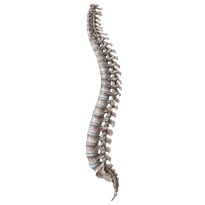
Anatomie: Wirbelsäule (Latein)
Die Wirbelsäule ist das Rückgrat des Menschen und unterstützt das axiale Skelett. Über die unterschiedlichen Wirbel und ihre Besonderheiten erfahrt ihr hier.

Schnittbildanatomie: Weibliches Becken (Latein)
In diesen Schnittbildern sehen wir die Knochen, Organe, Gefäße und Nerven des weiblichen Beckens.
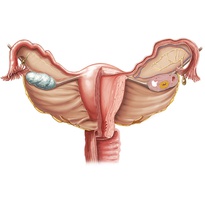
Anatomie: Weibliche Geschlechtsorgane (Latein)
Das weibliche Geschlechtssystem besteht aus Organen, die auf Funktionen wie die Eizellproduktion und Versorgung des befruchteten Eis spezialisiert sind.



Anatomie: Weibliche Brust (Latein)
Die Brüste sind Organe an der oberen ventralen, linken und rechten Seite des Torsos. Sie beinhalten Milch sezernierende Brustdrüsen, um Säuglinge zu ernähren.
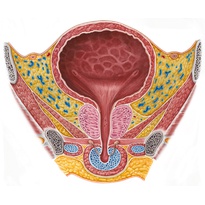
Anatomy: Urinary bladder (English)
The urinary bladder is a hollow muscular organ responsible for collecting urine coming from the kidneys through the ureters and excreting it via the urethra.

Anatomy: Ureter (English)
The ureters are tubes made of smooth muscle fibers that take urine from the kidneys to the urinary bladder..
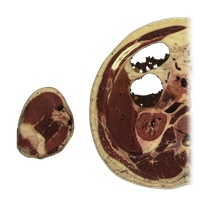
Cross Sectional Anatomy: Upper extremity (English)
In this chapter we see the bones, the muscles and the vessels of the upper extremity in the cross-sectional plane.

Schnittbildanatomie: Untere Extremität (Latein)
In diesem Kapitel lernt ihr, wie man Strukturen der unteren Extremität im Schnittbild erkennt.

Anatomy: Terminology (English)
In Human anatomy, there are 7000+ terms that need to be learned. Start with the basic terminology and become familiar with the language used in anatomy.

Anatomy: Teeth (English)
The teeth are anatomical structures that can be found in the oral cavity in both the upper and lower jaws.
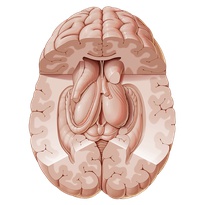
Anatomie: Subcorticale Strukturen (Latein)
Unterhalb des Thalamus befinden sich wichtige Strukturen (limbisches System, Diencephalon), die eine große Rolle für motorische und kognitive Funktionen spielen.


Anatomy: Stomach (English)
The stomach is an organ found in the upper abdomen and is part of the gastrointestinal tract. The main function of this organ is to produce digestive enzymes.

Anatomy: Spleen (English)
The spleen is found in the upper left part of the abdomen. Its main functions include filtering your blood, creating new blood cells and store platelets.

Anatomy: Spinal cord (English)
The spinal cord and the brain, together, make up the central nervous system (CNS). This chapter will discuss all the anatomy related to the spinal cord.

Anatomie: Speiseröhre (Latein)
Die Speiseröhre (Ösophagus) ist ein langer, fibromuskulärer Schlauch, der die Nahrung vom Rachen in den Magen weiterleitet.

Anatomy: Small intestine (English)
The small intestine is the part of the GI tract between the stomach and large intestine. This structure is divided into 3 parts: duodenum, jejunum and ileum.
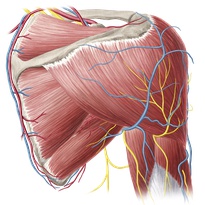
Anatomy: Shoulder and arm (English)
The shoulder is one of the largest joints, connecting the arm to the trunk. The upper arm is mainly defined by the humerus and muscles surrounding it.

Anatomie: Schulter und Arm (Latein)
Die Schulter ist eines der größten Gelenke im Körper und verbindet den Arm mit dem Rumpf. Die Anatomie des Oberarms wird in hohem Maße vom Humerus bestimmt.

Anatomy: Pharynx (English)
The pharynx is a muscular column running between the oral cavity and the esophagus. Each pharyngeal structure, including muscles and vessels, will be seen here.

Anatomie: Pharynx (Latein)
Der Rachen ist ein muskulärer Schlauch, der die Mundhöhle mit dem Larynx verbindet. Über die Muskeln, Nerven und Blutgefäße des Pharynx erfährst du hier.

Anatomy: Pelvis (English)
The pelvis is the lower part of the abdomen and houses the reproductive organs and the end of the digestive tract. All surrounded by pelvic bones and muscles.

Anatomie: Pankreas (Latein)
Die Bauchspeicheldrüse setzt Substanzen frei, die bei der Verdauung und der Regulation des Blutzuckerspiegels behilflich sind.

Anatomy: Pancreas (English)
The pancreas is an accessory organ of the GI tract whose function is to release substances that help regulate the blood sugar levels as well as digestion.
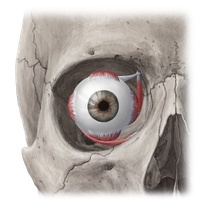
Anatomie: Orbita (Latein)
In der Orbita (Augenhöhle), die das Auge schützt, liegen und verlaufen viele Nerven, Gefäße und Muskeln. Erfahre alles darüber in diesem Kapitel.

Anatomy: Oral Cavity (English)
The oral cavity is an important internal area of the head and is the first part of the digestive system. It also plays a significant role in communication.

Anatomie: Ohr (Latein)
Als beidseitig angelegtes Organ am Kopf ist das Ohr wichtig für Gleichgewicht und Hörsinn. Es kann in das Äußere, mittlere und innere Ohr unterteilt werden.
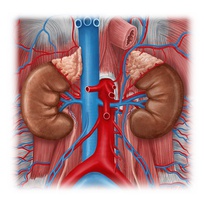
Anatomie: Niere (Latein)
Die Nieren sind ein paariges, bohnenförmiges Organ und befinden sich im hinteren Bereich des Bauchraumes. Die Hauptfunktion ist die Filterung des Blutes.


Anatomy: Neurovasculature of the upper limb (English)
The upper limbs are comprised of many structures that are supplied and innervated by arteries, veins and nerves which are found in this region of the body.
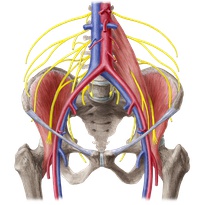
Anatomy: Neurovasculature of lower limb (English)
The lower limbs are comprised of many structures supplied and innervated by arteries, veins and nerves which are found in this region of the body.

Anatomy: Neurovasculature of head & neck (English)
The head and neck are comprised of many structures that are supplied and innervated by arteries, veins and nerves found in this region of the body.

Anatomie: Nerven und Gefäße der unteren Extremität (Latein)
Die untere Extremität besteht aus Strukturen, die von Nerven, Venen und Arterien aus dieser Region versorgt werden.