Bibliothèque de cartes mémoires / Médecine Saisir le code d'activation
Médecine
Molekulare Humangenetik
Einige zu wissende Fakten für die kommende Prüfung

Anatomie: Vorderer Rumpf (Latein)
Der vordere Rumpf bildet die Vorderwand des Abdomens und Thorax. Erfahre hier alles zu seinen Knochen, Muskeln und mehr.

Anatomy: Vertebral column (English)
The vertebral column is a bony structure providing the main support within the axial skeleton. It is further divided into sections which will be discussed here.

Anatomy: Ventral trunk (English)
The ventral trunk is a group structures, including bones and muscles, which define the chest and belly, known in technical terms as the thorax and and abdomen.



Cross Sectional Anatomy: Thorax (English)
In this chapter we will explore the organs of the thoracic cavity and the thoracic wall as seen in cross sections.

Anatomie: Terminologie (Latein)
Die menschliche Anatomie besteht aus über 7000 Begriffen. Starte mit der grundlegenden Terminologie und gewöhne dich an die Sprache der Anatomie.

Anatomy: Subcortical structures (English)
Below the cortex there are important structures (limbic system, diencephalon and ventricles) that play an important role in both motor and cognitive functions.
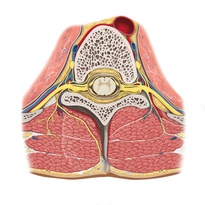
Anatomie: Rückenmark (Latein)
Das Rückenmark bildet gemeinsam mit dem Gehirn das zentrale Nervensystem (ZNS). In diesem Kapitel lernst du alles über die zugehörigen Strukturen.
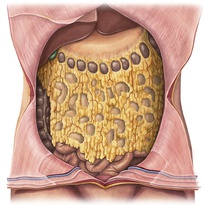
Anatomie: Peritonealhöhle (Latein)
Die Peritonealhöhle liegt zwischen dem parietalen und viszeralen Peritoneum. Beide Membranen grenzen die Organe in der Peritonealhöhle von der Bauchdecke ab.

Anatomy: Peritoneal cavity (English)
The peritoneal cavity is a space between the parietal and visceral peritoneum, which are the two membranes that separate the organs from the abdominal wall.

Anatomy: Orbit and contents (English)
The bony orbit is the skeletal cavity or socket which is made up of several cranial structures and surrounds the soft tissue that make up the eye.

Schnittbildanatomie: Obere Extremität (Latein)
In diesem Kapitel schauen wir uns die Knochen, Muskeln und Gefässe der oberen Extremität im Schnittbild an.


Cross Sectional Anatomy: Male Pelvis (English)
In this set of cross sections we see the bones, muscles, organs, vessels and nerves of the male pelvis.

Cross Sectional Anatomy: Lower extremity (English)
In this chapter you will learn how to identify the structures of the lower extremity in the cross-sectional plane.
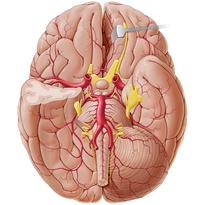
Anatomie: Hirnhäute & Blutgefässe des Gehirns (Latein)
In diesem Kapitel werden wir die Hirnhäute und die Blutgefässe des Gehirns kennen lernen.

Anatomy: Heart (English)
The heart is responsible for pumping blood all over your body. It is a vital organ that has a complex structure made of cardiac tissue and embedded vessels.

Anatomy: Head (English)
The head is comprised of many structures including the eyes, ears, nose and mouth, which aid in various sensory functions, such as sight, hearing and taste.

Anatomie: Hals (Latein)
Der Hals verbindet den Kopf mit dem Rumpf. Über seine zahlreichen wichtigen Strukturen, wie Nerven und Blutgefässe, erfährst du hier.

Cross Sectional Anatomy: Female pelvis (English)
In this set of cross sections we see the bones, muscles, organs, vessels and nerves of the female pelvis.
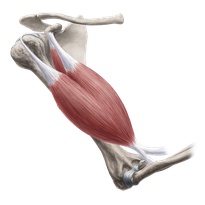
Anatomie: Einblick - Knochen & Muskeln (Latein)
Bevor du dich mit dieser riesigen Menge an Strukturen beschäftigst, fange mit den Hauptknochen und Muskeln im menschlichen Körper an.


Anatomy: Dorsal trunk (English)
The dorsal trunk is a group structures, including bones and muscles, which define the back. Those structures comprise the dorsal walls of the abdomen and thorax.

Anatomy: Cranial nerves (English)
The twelve cranial nerves emerge from the brain and the brainstem. Via the cranial nerves, information is exchanged between the brain and areas of the body.
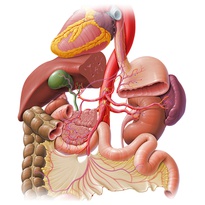
Anatomie: Überblick über die Organsysteme (Latein)
Ein Organsystem besteht anatomischen Strukturen, die als Einheit wichtige Aufgaben im Körper auszuführen. Hier schauen wir uns diese Systeme an.

Anatomie: Zähne (Latein)
Die Zähne sind anatomische Strukturen in der Mundhöhle sowohl im Ober- als auch im Unterkiefer und gehören zu den komplexesten Strukturen des Körpers.

Anatomie: Zwerchfell (Latein)
Das Zwerchfell (Diaphragma) ist ein Skelettmuskel im Rumpf und bildet die Grenze zwischen Brust- und Bauchhöhle. Viele Strukturen u.a. Blutgefäße durchlaufen es.
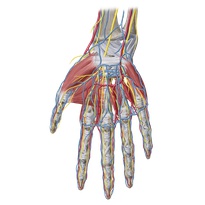
Anatomy: Wrist and hand (English)
The wrist is an area connecting the forearm to the hand and is mainly defined by the carpal bones. Let's look at the structures found in the wrist and hand.
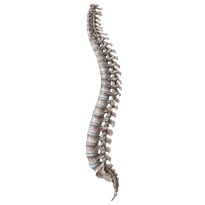
Anatomie: Wirbelsäule (Latein)
Die Wirbelsäule ist das Rückgrat des Menschen und unterstützt das axiale Skelett. Über die unterschiedlichen Wirbel und ihre Besonderheiten erfahrt ihr hier.

Schnittbildanatomie: Weibliches Becken (Latein)
In diesen Schnittbildern sehen wir die Knochen, Organe, Gefäße und Nerven des weiblichen Beckens.

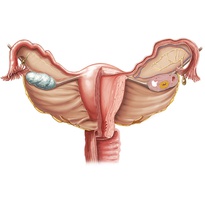
Anatomie: Weibliche Geschlechtsorgane (Latein)
Das weibliche Geschlechtssystem besteht aus Organen, die auf Funktionen wie die Eizellproduktion und Versorgung des befruchteten Eis spezialisiert sind.

Anatomie: Weibliche Brust (Latein)
Die Brüste sind Organe an der oberen ventralen, linken und rechten Seite des Torsos. Sie beinhalten Milch sezernierende Brustdrüsen, um Säuglinge zu ernähren.
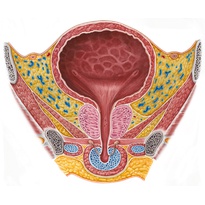
Anatomy: Urinary bladder (English)
The urinary bladder is a hollow muscular organ responsible for collecting urine coming from the kidneys through the ureters and excreting it via the urethra.

Anatomy: Ureter (English)
The ureters are tubes made of smooth muscle fibers that take urine from the kidneys to the urinary bladder..
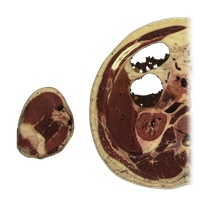
Cross Sectional Anatomy: Upper extremity (English)
In this chapter we see the bones, the muscles and the vessels of the upper extremity in the cross-sectional plane.

Schnittbildanatomie: Untere Extremität (Latein)
In diesem Kapitel lernt ihr, wie man Strukturen der unteren Extremität im Schnittbild erkennt.

Anatomy: Terminology (English)
In Human anatomy, there are 7000+ terms that need to be learned. Start with the basic terminology and become familiar with the language used in anatomy.

Anatomy: Teeth (English)
The teeth are anatomical structures that can be found in the oral cavity in both the upper and lower jaws.



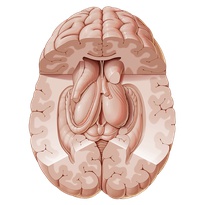
Anatomie: Subcorticale Strukturen (Latein)
Unterhalb des Thalamus befinden sich wichtige Strukturen (limbisches System, Diencephalon), die eine große Rolle für motorische und kognitive Funktionen spielen.

Anatomy: Stomach (English)
The stomach is an organ found in the upper abdomen and is part of the gastrointestinal tract. The main function of this organ is to produce digestive enzymes.

Anatomy: Spleen (English)
The spleen is found in the upper left part of the abdomen. Its main functions include filtering your blood, creating new blood cells and store platelets.

Anatomy: Spinal cord (English)
The spinal cord and the brain, together, make up the central nervous system (CNS). This chapter will discuss all the anatomy related to the spinal cord.